


IP Areas Refresher
IP Areas in VMware Cloud Director (VCD) is an improved IP handle administration resolution to allow Service Suppliers and Tenants to handle IP handle allocations in VCD securely and independently for numerous functions. The function empowers the Supplier to assemble public (shared) or non-public IP handle ranges and blocks for the Tenants, permitting larger management and administration of IP handle distribution and utilization. By exploiting IP Areas, Organizations can have particular person IP schema accessible for his or her digital knowledge facilities whereas making certain that IP conflicts are prevented. This offers Tenants or companies with a safer and scalable networking setting.
VCD 10.5 launched vital new IP Areas capabilities, which I’ll deep-dive in two consequent weblog posts – beginning with the IP Area’ Community Topology enchantments for Default NAT and Firewall guidelines auto-configuration.
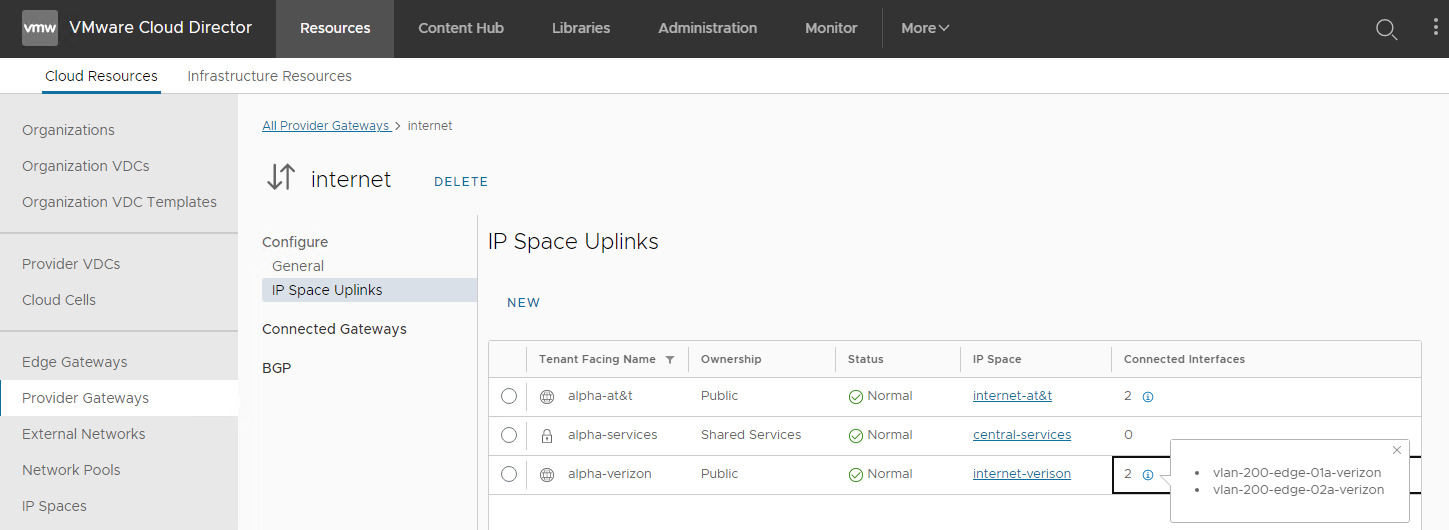
Supplier Gateway Uplink Affiliation
VCD 10.5 offers a extra granular Supplier Gateway IP Area Uplink affiliation. The service suppliers can affiliate precise NSX Tier-0 Gateway interfaces with the IP Areas Uplink.
Understanding the underlying Tier-0 Gateway interfaces and having these mapped to particular IP Areas offers a easy configuration of NAT and Firewall guidelines that require interface consciousness. This permits a extra versatile strategy to configure the IP Area mapping and allow the north-south visitors with autogenerated default NAT and Firewall guidelines (described beneath) per Tier-0 interface/s. The Tier-0 Gateway interface/s can be utilized in a number of IP Areas Uplinks definitions. Suppliers may select to not choose any interface, through which case the NAT and Firewall guidelines get utilized to all.
IP Area’ Community Topology Defaults
Along with the beforehand current “Route Commercial” enablement within the Community Topology part of an IP Area, VCD 10.5 helps default SNAT, NO SNAT, and NAT matching Firewall guidelines auto-generation. This function helps the supplier to arrange tenants’ communication paths rapidly and securely by intelligently using the IP handle knowledge from the IP Areas.
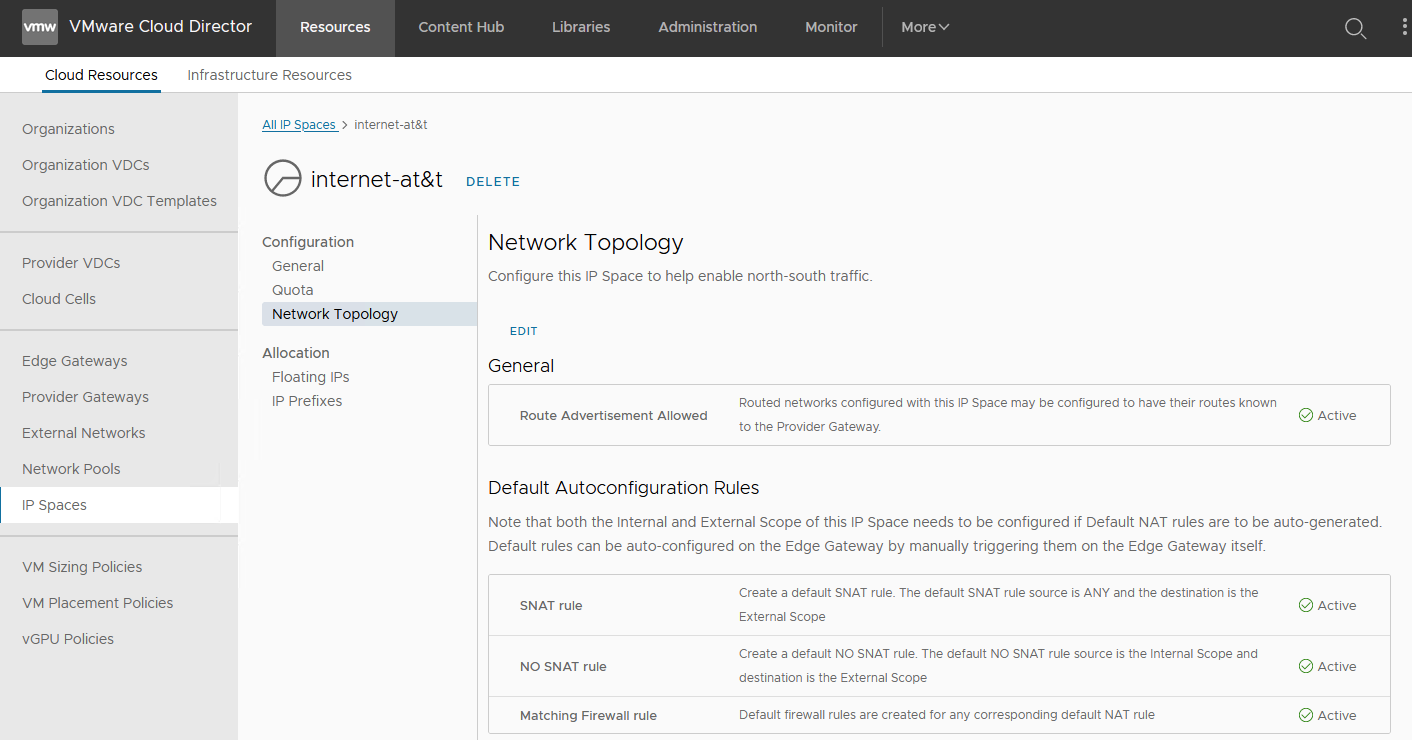
To create these guidelines, the supplier should manually provoke an workflow. This may be achieved on both an Edge Gateway or a devoted Supplier Gateway that’s backed by an Lively/Standby Tier-0/VRF.
When a service supplier needs to make the most of each natively routed and NAT-ed topologies (Route Commercial and SNAT are chosen), they will specify that they’d additionally like a default NO SNAT rule. This choice will permit for a configuration that stops the IP Area Inside Scope subnets from being NATed, whereas all the remainder of the visitors will probably be topic to the default SNAT rule.
An in depth demo of configuring these capabilities, together with exams and verifications for the carried out default NAT and Firewall auto-configurations, is on the market right here:
Default Service Configuration Particulars
The supplier can create default NAT and Firewall guidelines on the Supplier Gateway if it meets two circumstances:
- The Supplier Gateway is Non-public (tenant devoted)
- An Lively/Standby Tier-0/VRF backs the Supplier Gateway
The NAT and FW guidelines on the Supplier Gateway aren’t presently uncovered within the VCD UI, however might be seen and managed from the NSX Supervisor. This performance will probably be supplied in a function VCD launch.

In case the Supplier Gateway’s necessities aren’t fulfilled, or such configuration isn’t desired, default NAT and Firewall guidelines might be auto-created on the Edge Gateway (if required). The default providers auto-configuration on the Edge Gateway works for any IP Areas enabled Supplier Gateway deployment fashions (Public, Non-public, A/A, and A/S Tier0).
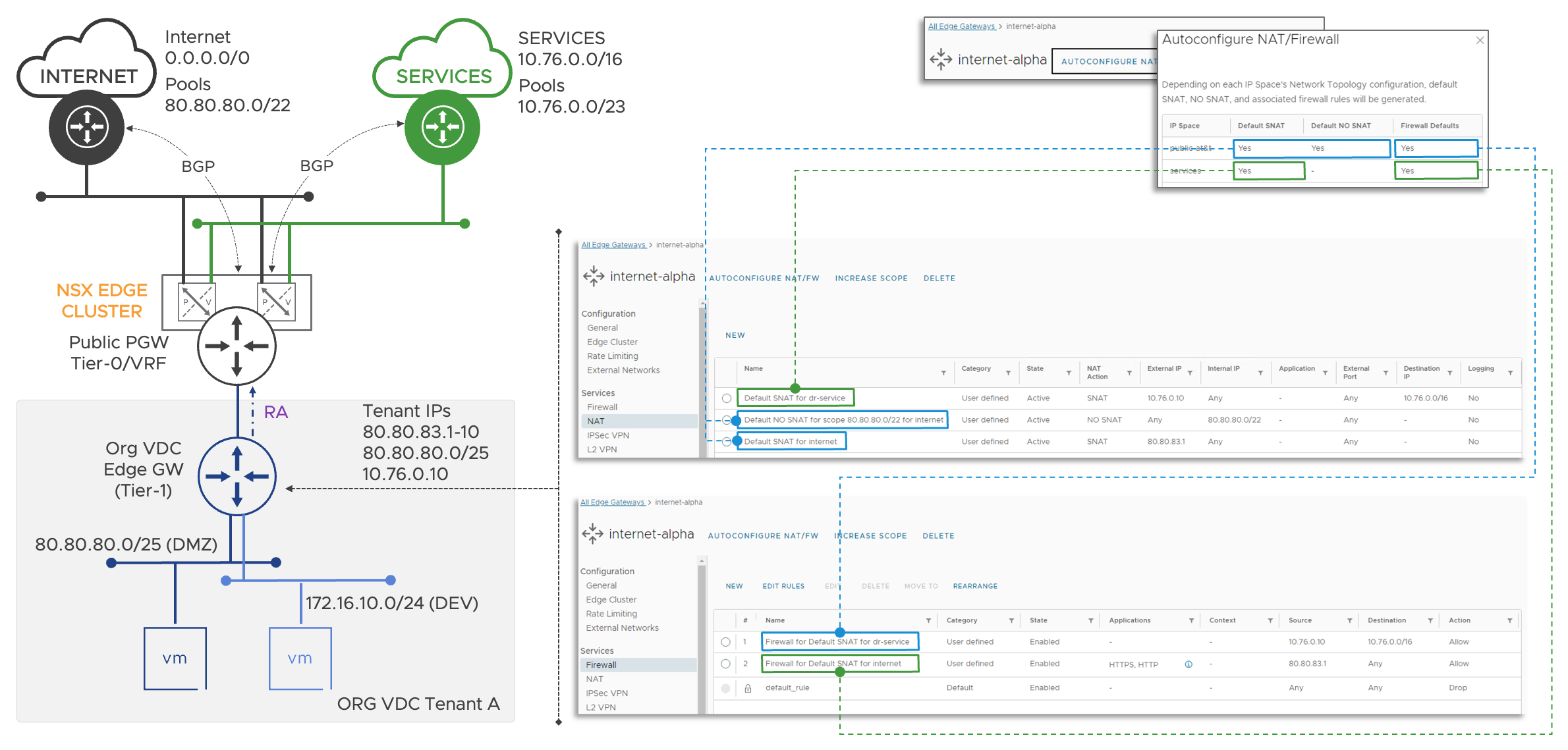
The present default NAT guidelines workflow assumes green-filed Edge or Supplier Gateways (current NAT guidelines aren’t supported). VCD additionally doesn’t presently monitor Edge Gateway or Supplier Gateway modifications (for instance, a brand new Tier-0 GW interface) to replace the already deployed default NAT and Firewall guidelines. Within the case of such, the service supplier has to navigate to every Gateway and re-apply the defaults. In future releases, this expertise will probably be enhanced.
Default NAT Guidelines
Together with the IP Area Inside Scope definition, which is a compulsory parameter, the profitable default NAT guidelines auto-generation requires:
- IP Area Exterior Scope definition
- IP Area IP Ranges for service configuration
- The default SNAT and/or default NO SNAT options should be enabled for the IP Area Community Topology
Within the case of a Supplier Gateway workflow, VCD appears to be like on the related Tier-0/VRF interfaces to find out which IP Areas should be thought of when producing the default guidelines. VCD will ignore any IP Area which doesn’t adjust to the above stipulations.
NAT Guidelines Precedence
The default NAT guidelines definition relies on an IP Area’s Inside and Exterior scope. The principles’ precedence (order) depends upon whether or not they’re a SNAT rule or a NO SNAT rule and whether or not or not the exterior scope is the “default” route (0.0.0.0/0).
The next desk offers an instance abstract of VCD auto-generated default NAT guidelines and their priorities.
| Rule Description | IP Area Inside Scope | IP Area Exterior Scope | Rule Precedence |
| Default NO SNAT for WAN | 172.30.0.0/20 | 172.16.0.0/12 | 0 |
| Consumer-created NAT Rule | 50 | ||
| Default SNAT for WAN | 10.76.0.0/16 | 10.0.0.0/8 | 100 |
| Default SNAT for Companies | 10.76.0.0/23 | 10.76.0.0/16 | 100 |
| Default NO SNAT for Web | 80.80.80.0/22 | 0.0.0.0/0 | 1000 |
| Default SNAT for Web | 80.80.80.0/22 | 0.0.0.0/0 | 1001 |
Matching Firewall Guidelines
Together with the default SNAT and NO SNAT guidelines configuration, VCD 10.5 permits the auto-creation of the related Firewall guidelines on both the Edge or Supplier Gateway. These are solely created if NAT or NO NAT guidelines are generated.
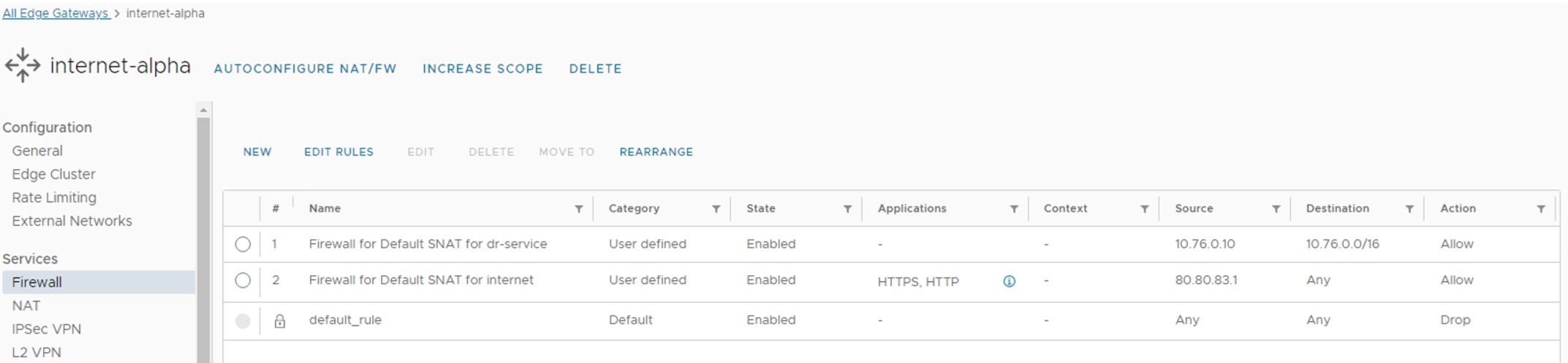
No firewall rule is generated for default NO SNAT guidelines when the IP Area Exterior Scope is the default route (0.0.0.0/0). For all different default NO SNAT guidelines, the firewall rule is ready utilizing the IP Area Inside and Exterior scopes for the rule supply and vacation spot, respectively.
Last Ideas
VMware Cloud Director 10.5 has introduced essential new options for IP Areas to enhance the Suppliers’ and Tenants’ expertise with the IP handle administration service supplied.
The purpose is to offer speedy, error-prune, and safe options in order that cloud service suppliers and enterprises obtain streamlined community provisioning and improve safety in VCD environments.
Try my second weblog from this collection if you wish to discover one other new VCD 10.5 function – IP Areas Migration.
Stay up-to-date by repeatedly checking this weblog for the most recent updates. You may as well join with us on Slack, Fb, Twitter, and LinkedIn.
Keep tuned for brand spanking new demo movies and enablement on YouTube, particularly our Function Fridays collection.

