


We live on the daybreak of the general-purpose robotics age. Dozens of corporations have now determined that it is time to make investments huge in humanoid robots that may autonomously navigate their method round present workspaces and start taking on duties from human employees.
A lot of the early use circumstances, although, fall into what I might name the Planet Health class: the robots will raise issues up, and put them down. That’ll be nice for warehouse-style logistics, loading and unloading vehicles and pallets and whatnot, and shifting issues round factories. Nevertheless it’s not all that glamorous, and it actually does not method the usefulness of a human employee.
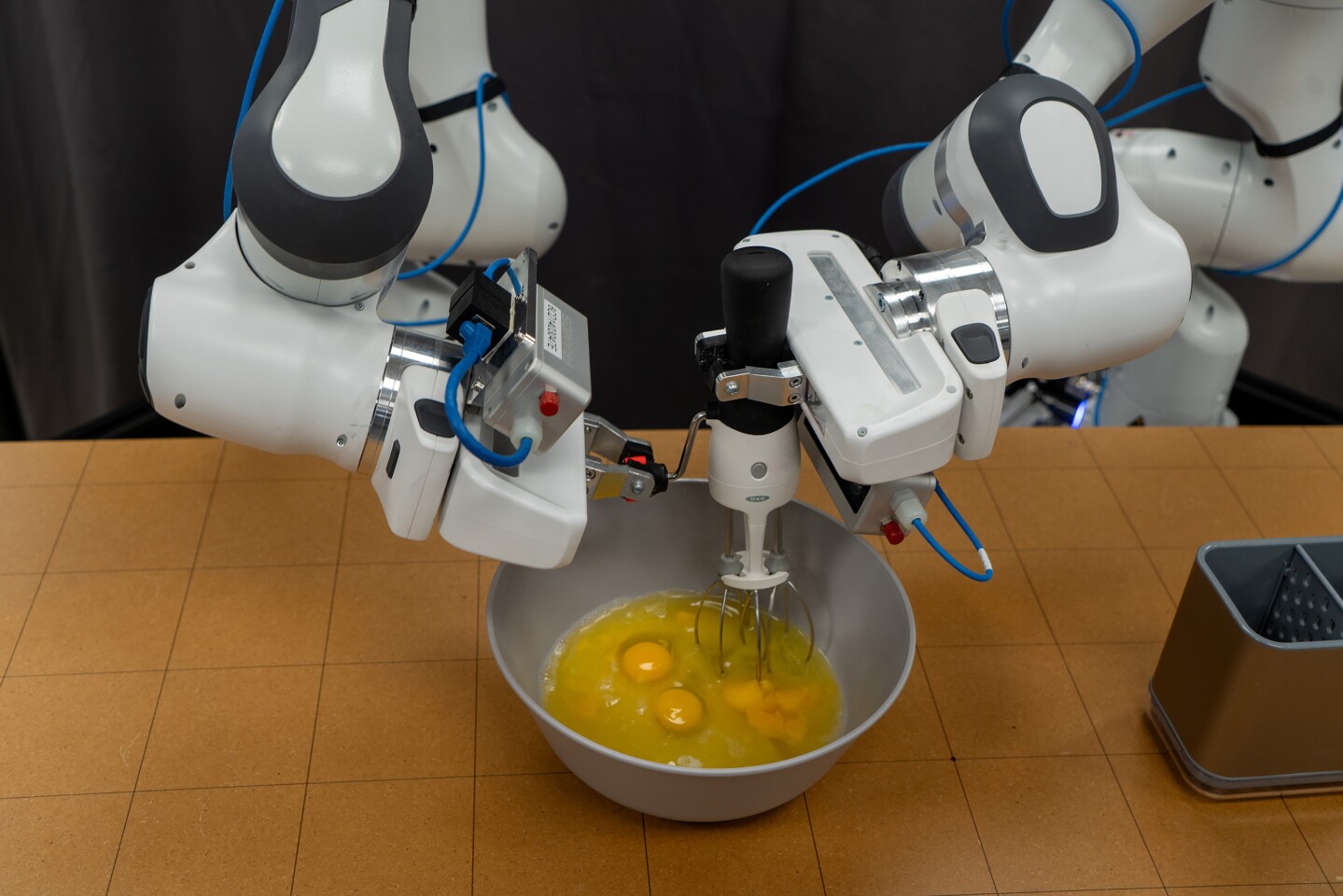
For these capabilities to increase to the purpose the place robots can wander into any job web site and begin taking on all kinds of duties, they want a method of rapidly upskilling themselves, primarily based on human directions or demonstrations. And that is the place Toyota claims it is made a large breakthrough, with a brand new studying method primarily based on Diffusion Coverage that it says opens the door to the idea of Giant Conduct Fashions.
Toyota Analysis Institute
Diffusion Coverage is an idea Toyota has developed in partnership with Columbia Engineering and MIT, and whereas the small print rapidly turn out to be very arcane as you look deeper into these things, the group describes the overall concept as, “a brand new method of producing robotic habits by representing a robotic’s visuomotor police as a conditional denoising diffusion course of.” You may study extra and see some examples within the group’s analysis paper.
Basically, the place Giant Language Fashions (LLMs) like ChatGPT can ingest billions of phrases of human writing, and educate themselves to jot down and code – and even motive, for god’s sake – at a degree astonishingly near people, Diffusion Coverage permits robotic AIs to observe how a human does a given bodily activity in the true world, after which basically program itself to carry out that activity in a versatile method.
Whereas some startups have been educating their robots by means of VR telepresence – giving a human operator precisely what the robotic’s eyes can see and permitting them to regulate the robotic’s arms and arms to perform the duty – Toyota’s method is extra centered on haptics. Operators do not put on a VR headset, however they obtain haptic suggestions from the robotic’s gentle, versatile grippers by means of their hand controls, permitting them in some sense to really feel what the robotic feels as its manipulators come into contact with objects.
Toyota Analysis Institute
As soon as a human operator has proven the robots how one can do a activity numerous totally different instances, below barely totally different circumstances, the robotic’s AI builds its personal inner mannequin of what success and failure appears like, after which goes and runs 1000’s upon 1000’s of physics-based simulations primarily based on its inner fashions of the duty, to house in on a set of strategies to get the job completed.
“The method begins with a trainer demonstrating a small set of expertise by means of teleoperation,” says Ben Burchfiel, who goes by the enjoyable title of Supervisor of Dextrous Manipulation. “Our AI-based Diffusion Coverage then learns within the background over a matter of hours. It’s normal for us to show a robotic within the afternoon, let it study in a single day, after which come within the subsequent morning to a working new habits.”
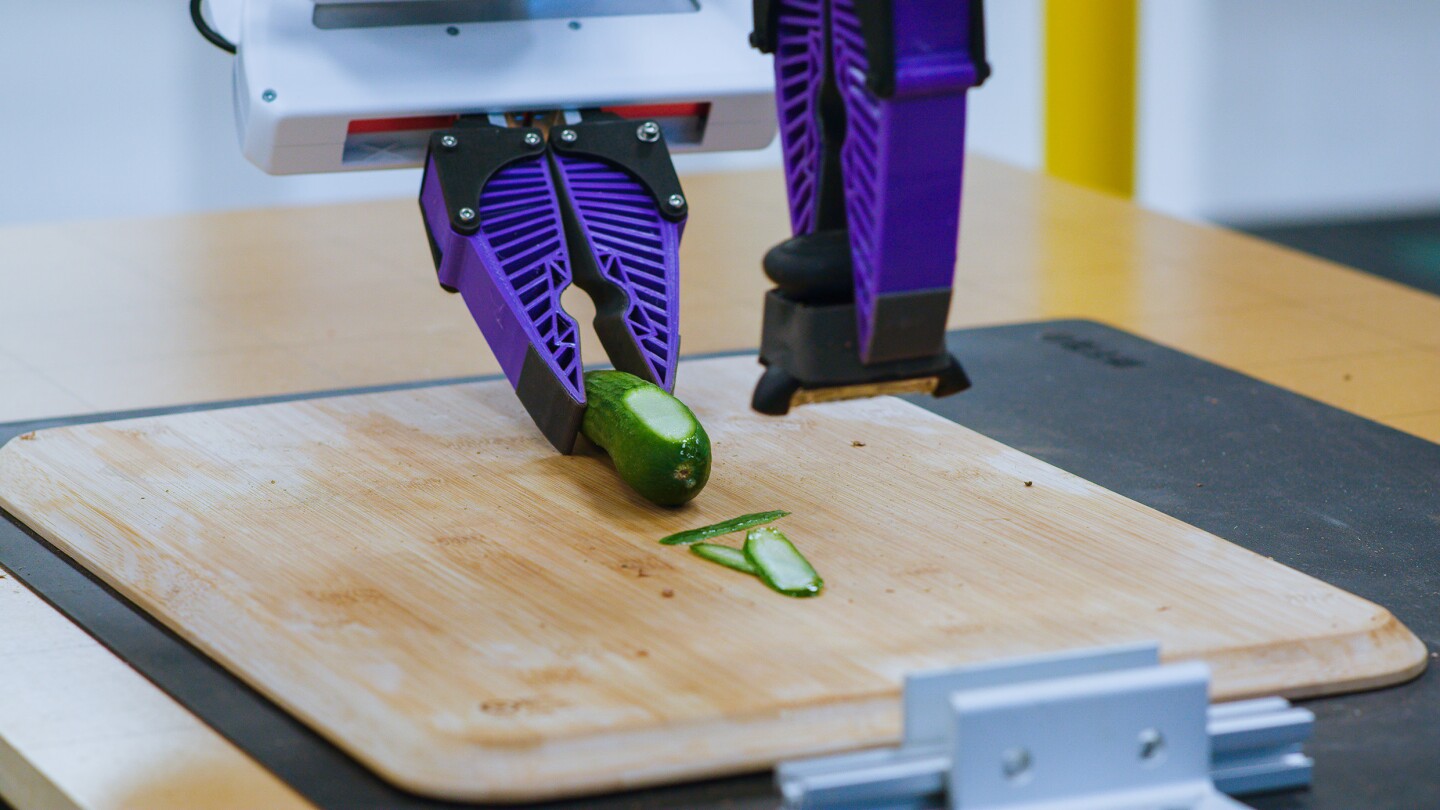
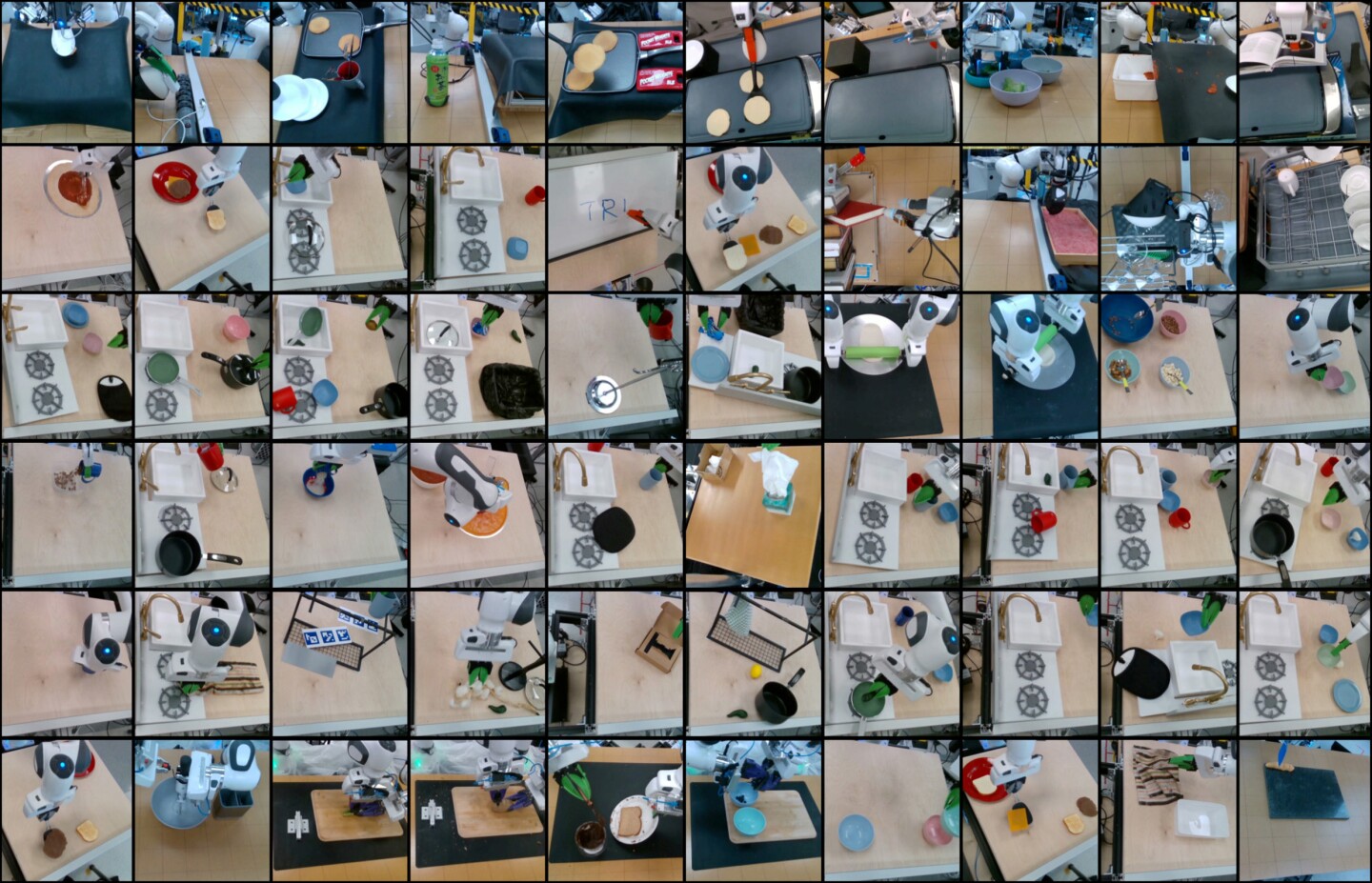
The workforce has used this method to quickly practice the bots in upwards of 60 small, largely kitchen-based duties to date – every comparatively easy for the typical grownup human, however every requiring the robots to determine on their very own how one can seize, maintain and manipulate several types of objects, utilizing a variety of instruments and utensils.
Toyota Analysis Institute
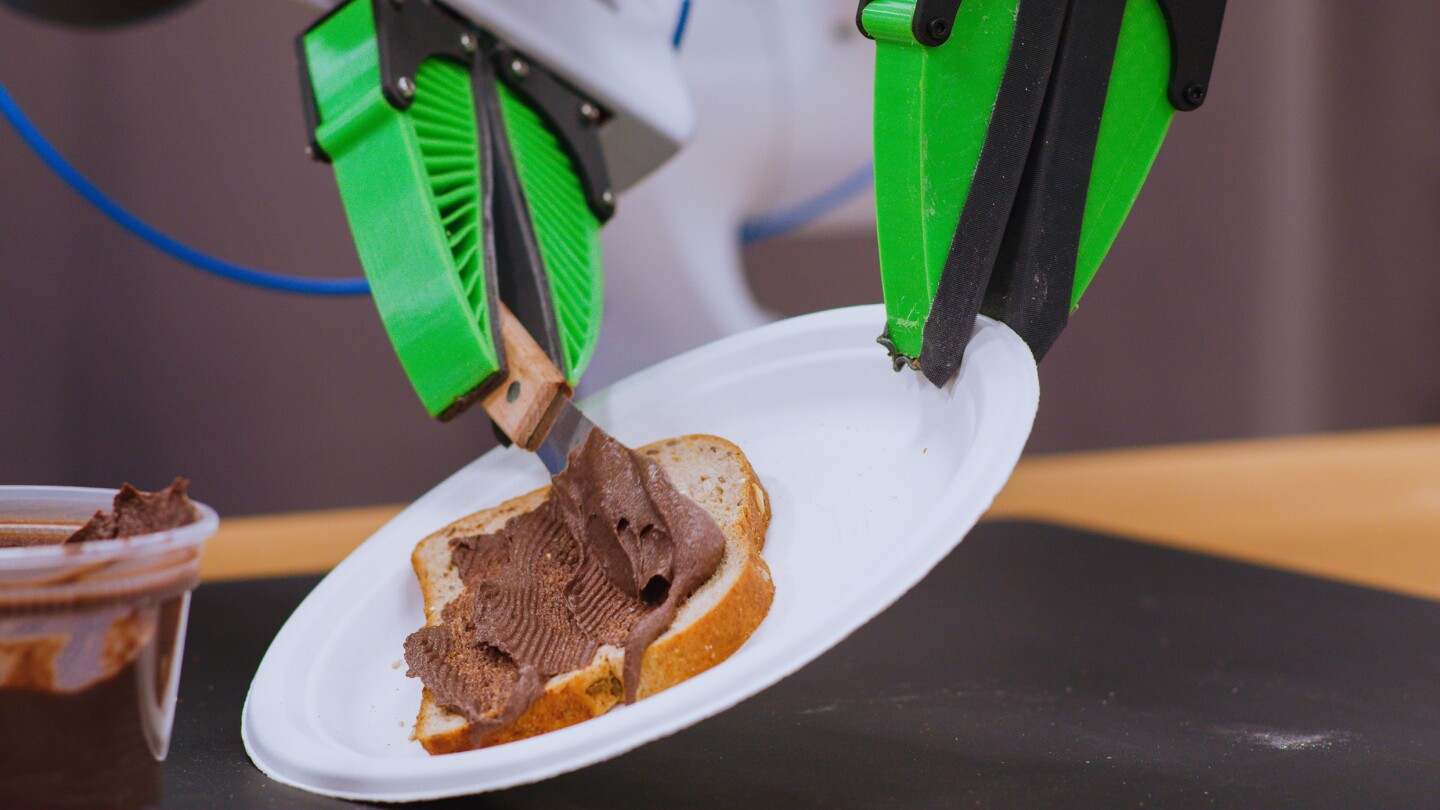
We’re speaking utilizing a knife to evenly put an expansion on a slice of bread, or utilizing a spatula to flip a pancake, or utilizing a potato peeler to peel potatoes. It is realized to roll out dough right into a pizza base, then spoon sauce onto the bottom and unfold it round with a spoon. It is eerily like watching younger youngsters determine issues out. Test it out:
Educating Robots New Behaviors
Toyota says it’s going to have lots of of duties below management by the top of the 12 months, and it is focusing on over 1,000 duties by the top of 2024. As such, it is growing what it believes would be the first Giant Conduct Mannequin, or LBM – a framework that’ll ultimately increase to turn out to be one thing just like the embodied robotic equal of ChatGPT. That’s to say, a very AI-generated mannequin of how a robotic can work together with the bodily world to realize sure outcomes, that manifests as an enormous pile of knowledge that is utterly inscrutable to the human eye.
The workforce is successfully putting in the process by which future robotic homeowners and operators in every kind of conditions will be capable of quickly educate their bots new duties as mandatory – upgrading total fleets of robots with new expertise as they go.
“The duties that I’m watching these robots carry out are merely wonderful – even one 12 months in the past, I might not have predicted that we have been near this degree of various dexterity,” says Russ Tedrake, VP of Robotics Analysis on the Toyota Analysis Institute. “What’s so thrilling about this new method is the speed and reliability with which we will add new expertise. As a result of these expertise work straight from digicam photos and tactile sensing, utilizing solely realized representations, they’re able to carry out properly even on duties that contain deformable objects, fabric, and liquids — all of which have historically been extraordinarily troublesome for robots.”
Toyota Analysis Institute
Presumably, the LBM Toyota is at the moment developing would require robots of the identical sort it is utilizing now – custom-built items designed for “dextrous dual-arm manipulation duties with a particular give attention to enabling haptic suggestions and tactile sensing.” Nevertheless it does not take a lot creativeness to extrapolate the concept right into a framework that humanoid robots with fingers and opposable thumbs can use to realize management of a good broader vary of instruments designed for human use.
And presumably, because the LBM develops a increasingly more complete “understanding” of the bodily world throughout 1000’s of various duties, objects, instruments, areas, and conditions, and it positive factors expertise with a variety of dynamic, real-world interruptions and sudden outcomes, it’s going to turn out to be higher and higher at generalizing throughout duties.
Daily, humanity’s inexorable march towards the technological singularity appears to speed up. Each step, like this one, represents an astonishing achievement, and but every catapults us additional towards a future that is trying so totally different from at present – not to mention 30 years in the past – that it feels almost unimaginable to foretell. What is going to life be like in 2050? How a lot can you actually put outdoors the vary of potential outcomes?
Buckle up mates, this experience is not slowing down.
Supply: Toyota

